Temperament
What is a Maltipoo like to live with?
Every breed guide says "playful and affectionate." After 100+ placements, we can be more useful than that, including about the parts other sellers skip.
Ask if it fits your homeWhat is the Maltipoo temperament?
Devoted, clever, and deeply people-attached: a Maltipoo is a velcro lap dog that follows you room to room and wants company through the day, and it will say so vocally when it lacks it. The maltipoo personality suits homes where someone is usually around, and struggles in flats that empty out every weekday.
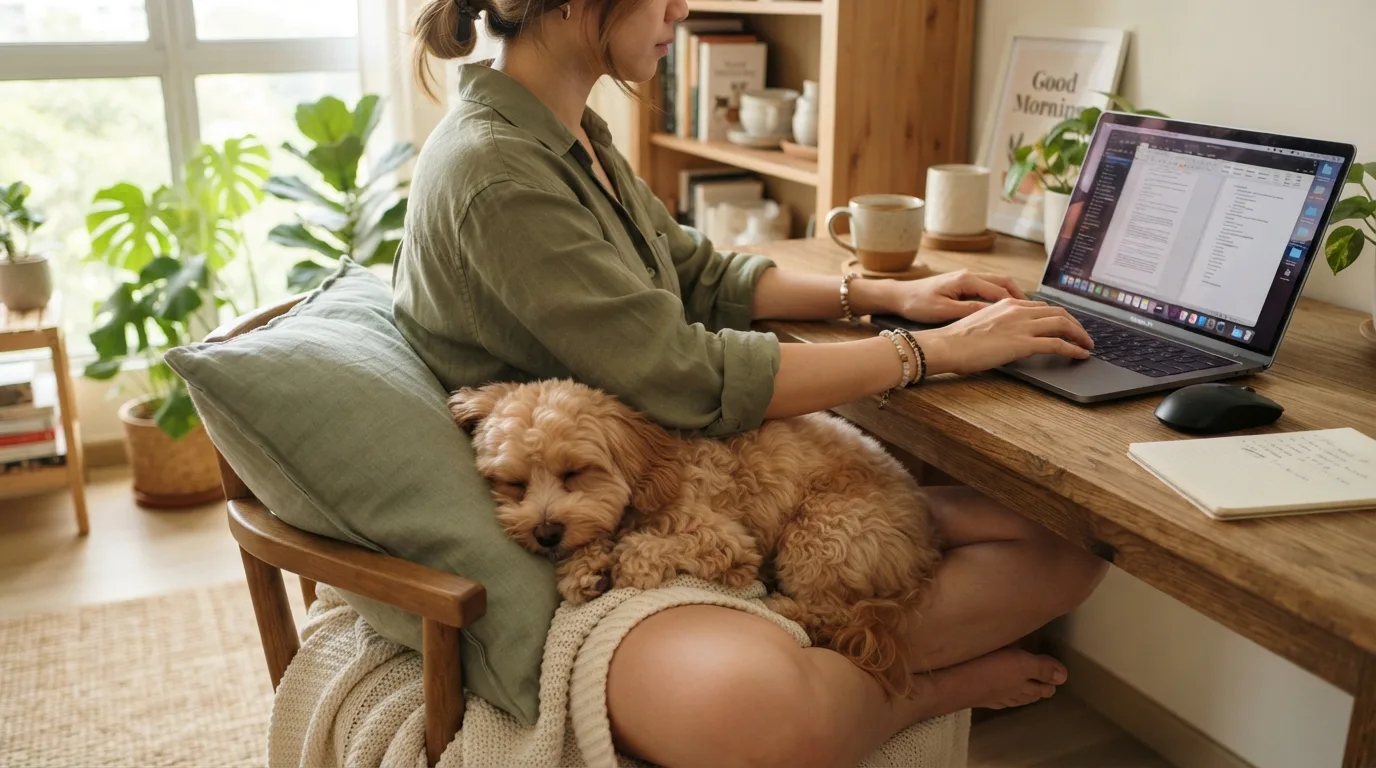
The devotion, described accurately
Live with a Maltipoo and you acquire a shadow. It moves when you move, naps against your leg rather than across the room, and usually elects one favourite person while loving the rest of the household on retainer. It reads moods well enough that owners swear it knows a bad day before they do. If you have seen the phrase velcro dog and wondered whether it is marketing, it is not; it is a maltipoo behavior report.
Here is the honest cost of that, and the real maltipoo pros and cons in one line: the attachment that makes it wonderful does not switch off when you leave. Of all the maltipoo characteristics people research, this is the one that decides everything. So is Maltipoo a good dog? For the right routine, one of the best we place; that is why we ask about yours before showing you a puppy.
Maltipoo character, condensed
- Velcro-level attachment, favourite-person tendency
- Gentle and playful indoors
- Reads household moods
- The trade: does not enjoy being alone
Clever, and it shows early
Are Maltipoo smart? The Poodle parent answers that: toilet training lands quickly, basic cues stick in days, and the included first lesson with an AVS-certified trainer usually ends with a sit, a recall, and a very smug puppy.
Clever cuts both ways. A quick mind with nothing to do invents jobs, usually loud or chewy ones, so rotate toys, teach tricks, and let it solve small puzzles. Ten minutes of brain work tires a toy dog as much as a walk does.
The clever checklist
- Fast toilet training for first-timers
- Cues stick in days, not weeks
- Needs mental play, not just walks
- First trainer lesson included with every puppy
The barking question, answered straight
Maltipoos are more vocal than the average small companion breed; that is the Maltese watchdog streak, miniaturised. Expect alert barks at the door chime and corridor footsteps, and expect it to escalate if the dog is lonely. A note from the shop floor: when an owner reports barking problems, the calendar almost always shows an empty flat.
The fix is two-part: enough daytime company (the honest requirement), and early quiet-marker training, which the trainer lesson covers. HDB's own considerate-ownership guidance names continuous barking as the courtesy line, and a settled Maltipoo stays well inside it.
Vocality, managed
- Alert-barker by nature, more vocal than average
- Loneliness is the loudest trigger
- Quiet-marker training from week one
- Daytime company keeps neighbours friendly
Which households it suits, mapped
From our placement records, the happiest Maltipoo homes are retirees with time and a routine, WFH owners whose meetings happen with a dog on their lap, and families where a helper or grandparent keeps the flat inhabited. Homes with young children work well too, with one caveat from the size guide: 2 to 4kg is delicate, so the toddlers need training before the puppy does.
The household it does not suit is the one that empties from 8am to 6pm. That routine belongs to a more independent breed, and our sister shop places Cavapoos for exactly that life; run the routine check and we will point you honestly either way. The full Maltipoo vs Cavapoo comparison makes the case in both directions.
The household map
- Retirees: the ideal match
- WFH owners: excellent, pen routine for calls
- Helper or grandparent home: excellent
- Young kids: good, supervise the hugging
- Empty flat 8am to 6pm: choose a Cavapoo instead
Frequently asked questions
Is Maltipoo a good family dog?
For families where someone is home through the day, yes: gentle, playful indoors, and devoted to everyone while usually picking a favourite. The one caution is physical, not temperamental; at 2 to 4kg it is delicate, so toddlers need supervising more than the dog does.
Are Maltipoos smart?
Yes, and it shows early. The Poodle side makes toilet training and basic cues genuinely quick for first-time owners, which is why the first trainer lesson we include gets results in one session. The flip side of clever is boredom, so rotate toys and teach tricks.
Do Maltipoos bark a lot?
More than the average small companion breed, honestly. They are alert-barkers, and vocality rises sharply when they are lonely. Early quiet-marker training and enough daytime company keep it to a level HDB neighbours never notice.
Do Maltipoos get along with cats and other dogs?
Generally yes, with proper introductions; they are companion-bred rather than territorial. Slow first meetings on neutral ground and separate feeding spots settle most multi-pet homes within weeks.
Can a Maltipoo be left alone during work hours?
Short stretches with a settled pen routine, yes. A full 8am to 6pm empty flat, every weekday, no. That routine belongs to a more independent breed like the Cavapoo, and we will tell you so before you buy, not after.
When do Maltipoo puppies calm down?
The puppy zoomies mellow through adolescence, roughly six to eighteen months, and the adult that emerges is a lap dog with short bursts of play. Consistent routine through adolescence is what decides how calm the adult is.
Meet your Maltipoo
Come say hello at Balestier
2 Balestier Road #01-701, Singapore 320002 · Weekdays 12pm–6pm · Weekends 10am–6pm. Or message us first: tell us about your home and routine, and we'll tell you honestly if a Maltipoo fits.
Does it fit your routine?
Two honest minutes on the home page routine check beats a mismatched year.
Take the routine test